
Comparison of Proximate body composition and heavy metals detection in Muscles and Liver Enzymes of Major Carps from Head Islam, Vehari
DOI:
https://doi.org/10.65139/9g40aw06Keywords:
aquaculture, enzymesAbstract
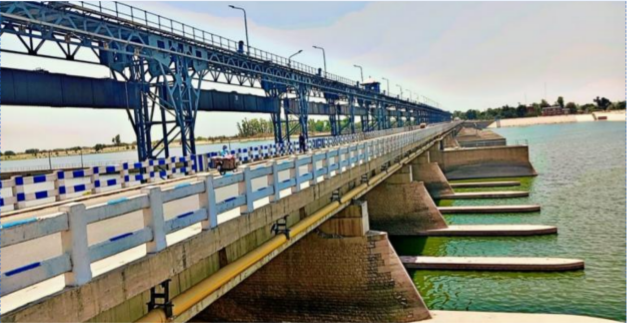
This study evaluated the comparison of proximate body composition and heavy metals detection in muscles and liver enzymes of three major freshwater carps Labeo rohita, Catla catla and Cirrhinus mrigala. Experimental groups were taken from three different water sites W1, W2 and W3 from Head Islam near Vehari and compared with a Control group taken from Assistant Director Fisheries District Vehari. Proximate body composition analysis revealed a significant decline in moisture content from 74.4% in the Control group to 72.0% in W3 and crude protein content decreased from 15.13% to 13.67% across the same water sites. Conversely, crude fat content showed a gradual increase, reaching 3.50 % while ash content fluctuates slightly but consistently remains within the acceptable reference range of 2.40 % to 2.16 %. Heavy metal accumulation was found to exceed recommended safety limits in W3, with Lead levels rising from 0.21 mg/kg in the control to 1.36 mg/kg in W3. Cadmium and Mercury levels also increased significantly across water sites. Liver enzyme activity showed marked elevation, with Aspartate Transaminase levels increasing from 50 U/L in controls to 114.3 U/L in W3, and similar trends were observed in Alanine Transaminase and Alkaline Phosphate levels, indicating liver stress and possible hepatocellular damage. Albumin slightly decreased but remained within normal limits. Bilburin levels rose gradually, nearing the upper limit in W3 samples. ANOVA results confirmed highly significant differences (P < 0.01) among major carps for all studied parameters. These findings underscore the detrimental effects of poor water quality on fish health and highlight the risk of bioaccumulation of toxic substances in edible fish tissues. The study emphasizes the need for routine water quality monitoring and stringent environmental controls to safeguard aquaculture productivity and consumer safety.
References
Agbugui, M. O., & Abe, G. O. (2022). Heavy metals in fish bioaccumulation and health. British Journal of Earth Sciences Research, 10(1), 47-66. https://doi.org/10 .37745/bjesr.2013/vol10no1pp.47-66
Ahmed, I., Jan, K., Fatma, S., & Dawood, M. A. (2022). Muscle proximate composition of various food fish species and their nutritional significance Journal of Animal Physiology and Animal Nutrition, 106(1), 690-719. https://doi.org/10.1111/jpn.13611 DOI: https://doi.org/10.1111/jpn.13711
Ahmed, M. K., Baki, M. A., Kundu, G. K., Islam, M. S., Hossain, M. M., & Sarkar, S. K. (2022). Detection of heavy metals in fish muscles of selected local fish. Science of The Total Environment, 838(1),37-46. https://doi.org/10.1016/j.scitotenv.2022.156163 DOI: https://doi.org/10.1016/j.scitotenv.2022.156163
Akpanyung, E. O., Akanemesang, U. M., Akpakpan, E. I., & Anodoze, N. O. (2014). Levels of heavy metals in fish obtained from two fishing sites in Akwa Ibom State, Nigeria. African Journal of Environmental Science and Technology, 8(1), 16-21. https://doi.org/10.5897/AJEST2013.1585
Arjunsinh, P. N., Datta, S. N., Singh, A., & Singh, P. (2024). Annual Variation in Proximate Chemical Composition of Fish Sold in Ludhiana Market: Punjab, India. European Journal of Nutrition & Food Safety, 16(7), 17-23. https://doi.org/10.9734/ejnfs/2024/v16i71452 DOI: https://doi.org/10.9734/ejnfs/2024/v16i71452
Ashfaq, M., Khan, M. A., & Khan, M. N. (2021). Length-weight relationships and condition factor of some fish species from the Indus River, Pakistan. Journal of Fish Biology, 99(3), 78-87. https://doi.org/10.1111/jfb.14838 DOI: https://doi.org/10.1111/jfb.14838
Ciftci, R., & Ünlü, E. (2017). Length-weight relationships of fish species from the Tigris River, Turkey. Turkish Journal of Fisheries and Aquatic Sciences, 17(3), 537-544. https://doi.org/10.4194/1303-2712-v17_3_09 DOI: https://doi.org/10.4194/1303-2712-v17_3_09
Farooq, M., Abutaha, N., Mahboob, S., Baabbad, A., Almoutiri, N. D., & Wadaan, M. A. A. M. (2020). Investigating the antiangiogenic potential of Rumex vesicarius (humeidh), anticancer activity in cancer cell lines and assessment of developmental toxicity in zebrafish embryos. Saudi Journal of Biological Sciences, 27(1), 11-22. https://doi.org/10.1016/j.sjbs.2019.11.022 DOI: https://doi.org/10.1016/j.sjbs.2019.11.042
Javed, M., & Usmani, N. (2019). An overview of the adverse effects of heavy metal contamination on fish health. Proceedings of the National Academy of Sciences, India, Section B: Biological Sciences, 89(1), 389-403. https://doi.org/10.1007/s40011-017-0875-7 DOI: https://doi.org/10.1007/s40011-017-0875-7
Khan, M. A., Ali, S., & Khan, S. (2019). Study on fish diversity in freshwater ecosystems. Journal of Freshwater Ecology, 34(2), 245-256. ttps://doi.org/10.1080/02705060.2019.1584365
Lucas, M. C., & Baras, E. (2019). Migration of Freshwater Fishes. Journal of Fish Biology, 74(1), 931-945. https://doi.org/10.1002/9780470999653 DOI: https://doi.org/10.1002/9780470999653
Mozaffarian, D., & Rimm, E. B. (2006). Fish intake, contaminants, and human health evaluating the risks and the benefits. Jama, 296(1), 85-99. https://doi.org/10.1001/jama.296.15.1885 DOI: https://doi.org/10.1001/jama.296.15.1885
Mushtaq, N., Singh, D. V., Bhat, R. A., Dervash, M. A., & Hameed, O. B. (2020). Freshwater contamination: sources and hazards to aquatic biota. Fresh water pollution dynamics and remediation, 14(1),27-50. https://doi.org/10.1007/978-981-13-8277-2_3 DOI: https://doi.org/10.1007/978-981-13-8277-2_3
Rahman, M. S., Molla, A. H., Saha, N., & Rahman, A. (2019).Study on heavy metals accumulation and health risk assessment in edible parts of fish species collected from Buriganga River, Dhaka, Bangladesh. Environmental Nanotechnology, Monitoring & Management,12(1), 267-270 https://doi.org/10.1016/j.enmm.2019.100232. DOI: https://doi.org/10.1016/j.enmm.2019.100232
Roy, T. (2024). Aquatic ecosystem toxicity and food chain. Toxicity of Aquatic System and Remediation, 3(1), 25–36. https://doi.org/10.1201/9781003297901-3 DOI: https://doi.org/10.1201/9781003297901-3
Setia, R., Dhaliwal, S. S., Kumar, V., Singh, R., Kukal, S. S., & Pateriya, B. (2020). Impact assessment of metal contamination in surface water of Sutlej River (India) on human health risks. Environmental Pollution, 265(2),114907-114910. https://doi.org/10.1016/j.envpol.2020.114907 DOI: https://doi.org/10.1016/j.envpol.2020.114907
Tacon, A. G. (2023). Contribution of fish and seafood to global food and feed supply: An analysis of the FAO food balance sheet for 2019. Reviews in Fisheries Science & Aquaculture, 31(1), 274-283. https://doi.org/10.1080/23308249.2022.2124364 DOI: https://doi.org/10.1080/23308249.2022.2124364
Vaseem, H., & Banerjee, T. K. (2016).Evaluation of pollution of Ganga River watfish as bioindicator. Environmental monitorin and assessment, 188(1),1-9. https://doi.org/10.1007/s10661-016-5433-x DOI: https://doi.org/10.1007/s10661-016-5433-x
Downloads
Published
Data Availability Statement
Data will be made available on request.
Issue
Section
Categories
License
Copyright (c) 2026 Tahira Ghafoor, Anam Saeed, Ayesha Zahid, Maryam Riasat, Rida Younas, Naureen Rana, Huanhuan Chen (Author)

This work is licensed under a Creative Commons Attribution 4.0 International License.
This work is licensed under a Creative Commons Attribution 4.0 International License.
How to Cite