
Effects of Polyvinyl Chloride Microplastics on the Growth Rate, Liver Enzyme, and Serum Metabolites of Cirrhinus mrigala
DOI:
https://doi.org/10.65139/r3d2ze70Keywords:
Global concern, aquatic toxicity., plastics usage, micro plastics, histopathology, serum metabolitesAbstract
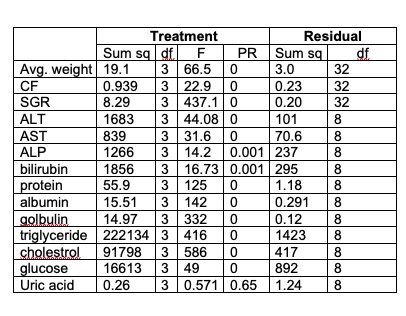
Polyvinyl chloride microplastics have become one of the most harmful aquatic pollutants, and their potential toxicity to fish has become one of the major issues. The target of our research was to determine the effects of polyvinyl chloride microplastics on the Cirrhinus mrigala growth pattern and serum metabolites like glucose, protein, and lipid profiles. To assess the effect of polyvinyl chloride on Cirrhinus mrigala, we use four containers marked as T0, T1, T2, and T3. An equal number of fingerlings was placed in each container. T0 used as control, in which we used no microplastics. While 50, 100, and 150 mg/L of microplastics were used in T1, T2, and T3, respectively. The research was performed under the complete randomized design (CRD). After 4 weeks of growth, the result was measured, and the result was analyzed by one-way ANOVA. After a specific time, the growth was compared. The fingerlings in T3 had a smaller length than those in other containers due to a high amount of PVC microplastics. The noticeable changes in the liver include loss of cell shape, damaged liver cells, and deposition of fat in parenchyma cells. The serum metabolites parameter was measured by LFT. Serum metabolite parameters such as ALT, AST, ALP, protein, bilirubin, and GGT were significantly elevated as PVC quantity increased. The results of this study revealed that a higher concentration of PVC microplastics could have negative impacts on the growth and liver of fish, which may ultimately endanger the food web.
References
Yan, J., & Li, F. (2023). Effects of sediment dredging on freshwater systems: A comprehensive review. ENVIRONMENTAL SCIENCE AND POLLUTION RESEARCH, 30, 119612–119626. https://doi.org/10.1007/s11356-023-30244-1 DOI: https://doi.org/10.1007/s11356-023-30851-8
Menezes, M., Teixeira de Mello, F., Ziegler, L., Wanderley, B., Gutiérrez, J. M., & Deo Dias, J. (2024). Revealing the hidden threats: Genotoxic effects of microplastics on freshwater fish. AQUATIC TOXICOLOGY, 276, 107089. https://doi.org/10.1016/j.aquatox.2024.107089 DOI: https://doi.org/10.1016/j.aquatox.2024.107089
Manam, V. K. (2023). Fish feed nutrition and its management in aquaculture. INTERNATIONAL JOURNAL OF FISHERIES AND AQUATIC STUDIES, 11(2), 58–61. https://doi.org/10.22271/fish.2023.v11.i2a.2791 DOI: https://doi.org/10.22271/fish.2023.v11.i2a.2791
Andrady, A. L., (2011). Microplastics in the marine environment.Marine Pollution Bulletin, 62 (8), 1596–1605. https://doi.org/10.1016/j.marpolbul.2011.05.030 DOI: https://doi.org/10.1016/j.marpolbul.2011.05.030
Barboza, L. G. A., Vieira, L. R., Branco, V., Figueiredo, N., Carvalho, F., Carvalho, C., & Guilhermino, L., (2020). Microplastics cause neurotoxicity, oxidative damage and energy-related changes and interact with the bioaccumulation of mercury in the European seabass, Dicentrarchus labrax (Linnaeus, 1758). Aquatic Toxicology, 219(7), 105377. https://doi.org/10.1016/j.aquatox.2017.12.008. DOI: https://doi.org/10.1016/j.aquatox.2017.12.008
Boyd, C. E., D’Abramo, L. R., Glencross, B. D., Huyben, D. C., Juarez, L. M., Lockwood, G. S., McNevin, A. A., Tacon, A. G. J., Teletchea, F., Tomasso, J. R., Tucker, C. S., & Valenti, W. C., (2018). Achieving sustainable aquaculture: Historical and current perspectives and future needs and challenges. Journal of the World Aquaculture Society, 51(3), 578–633. https://doi.org/10.1111/jwas.12714. DOI: https://doi.org/10.1111/jwas.12714
Chamas, A., Moon, H., Zheng, J., Qiu, Y., Tabassum, T., Jang, J. H., & Suh, S., (2020). Degradation rates of plastics in the environment.ACS Sustainable Chemistry & Engineering, 8 (9), 3494–3511. https://doi.org/10.1021/acssuschemeng.9b06635. DOI: https://doi.org/10.1021/acssuschemeng.9b06635
Chen, Q., Gundlach, M., Yang, S., Jiang, J., Velki, M., Yin, D., & Hollert, H., (2022). Quantitative investigation of the mechanisms of microplastics and nanoplastics toward zebrafish larvae locomotor activity. Science of the Total Environment, 806 (2), 150611. https://doi.org/10.1016/j.scitotenv.2017.01.156. DOI: https://doi.org/10.1016/j.scitotenv.2017.01.156
Choi, J. S., Jung, Y, J., Hong, N., Hong, S, H., & Park, J. W. (2018). Toxocological effects of irregularly shaped and spherical microplastics in a marine teleost, the medake. Marine pollution bulltin, 129(1), 231-240. https://doi.org/10.1016/j.marpolbul.2018.02.039. DOI: https://doi.org/10.1016/j.marpolbul.2018.02.039
D'Avignon, G., Gregory-Eaves, I., & Ricciardi, A. (2023). Combined effects of microplastics and warming reduce growth and predatory performance in an invasive fish.Science of the Total Environment, 858(1), 159742. https://doi.org/10.1002/lno.12417. DOI: https://doi.org/10.1002/lno.12417
El Bilali, H., Strassner, C., & Ben Hassen, T. (2021). Sustainable agri-food systems: Environment, economy, society, and policy. SUSTAINABILITY, 13(11), 6260. https://doi.org/10.3390/su13116260. DOI: https://doi.org/10.3390/su13116260
Gado, A. R., Soliman, M. M., El-Maddawy, Z. K., Soliman, N. K., El-Mahdy, M. M., & Aboubakr, M. (2023). Ingestion of Polyvinylchloride Powder Particles Induces Oxidative Stress and Hepatic Histopathological Changes in Oreochromis niloticus (Nile Tilapia). A Preliminary Study. Sustainability, 15(8), 6494. https://doi.org/10.3390/su15086494. DOI: https://doi.org/10.3390/su15086494
Jiang, J., (2018). Occurrence of microplastics and its pollution in the environment: A review.Sustainable Production and Consumption, 13(5), 16–23. https://doi.org/10.1016/j.spc.2017.11.003. DOI: https://doi.org/10.1016/j.spc.2017.11.003
Jovancic, B. (2017). Ingestion of microplastic by fish and its potential consequences from a physical persepectve. Intergrated environmental assessment and management. 13(3), 510-515. https://doi.org/10.1002/ieam.1913. DOI: https://doi.org/10.1002/ieam.1913
Kalina, M., & Tilly, E. (2020). We are already sick: Infexxtion waste Management and inequality in the time of Covid-19, a Reflection from Blantyre, Malawai. Human organization, 79(3), 187-196. https://doi.org/10.5334/wwwj.54. DOI: https://doi.org/10.5334/wwwj.54
Pitt, J. A., Kozal, J. S., Jayasundara, N., Massarsky, A., Trevisan, R., Geitner, N., & Di Giulio, R. T., (2018). Uptake, tissue distribution, and toxicity of polystyrene nanoparticles in developing zebrafish (Danio rerio) . Aquatic Toxicology, 194(1), 185–194. https://doi.org/10.1016/j.aquatox.2017.11.017. DOI: https://doi.org/10.1016/j.aquatox.2017.11.017
Sayed, A. E. D. H., Soliman, H. A., & Hamed, M. (2022). Polyethylene microplastics increases the tissue damage caused by 4-nonylphenol in the common carp (Cyprinus carpio) juvenile. Frontiers in Marine Science, 9(34), 1041003. https://doi.org/10.3389/fmars.2022.1041003. DOI: https://doi.org/10.3389/fmars.2022.1041003
Siddiqui, S., & Al-Khedhairy, A. A. (2024). Behavioral and molecular effects of micro and nanoplastics across three plastic types in fish: Weathered microfibers induce a similar response to nanosized particles. Frontiers in Toxicology, 2(1), 1490223. https://doi.org/10.3389/ftox.2024.1490223. DOI: https://doi.org/10.3389/ftox.2024.1490223
Wang, J., Li, Y., Lu, L., Zheng, M., Zhang, X., Tian, H., & Yan, C., (2022). Polystyrene microplastics cause tissue damages, sex-specific reproductive disruption and transgenerational effects in marine medaka (Oryzias melastigma).Environmental Pollution, 292 (1), 118304. https://doi.org/10.1016/j.envpol.2019.113024. DOI: https://doi.org/10.1016/j.envpol.2019.113024
Zhang, K., Shi, H., Peng, J., Wang, Y., Xiong, X., Wu, C., & Lam, P. K. S., (2021). Microplastic pollution in China's inland water systems: A review of findings, methods, characteristics, effects, and management.Science of the Total Environment, 630(1), 1641-1653. https://doi.org/10.1016/j.scitotenv.2018.02.300 DOI: https://doi.org/10.1016/j.scitotenv.2018.02.300
Downloads
Published
Data Availability Statement
Data will be made available on request.
URN
License
Copyright (c) 2026 Anam Saeed, Maryam Riasat, Ayesha Zahid, Faiza Maqsood, Tahira Ghafoor, Muneeb Ul Rehman, Rida Younas, Naureen Rana (Author)

This work is licensed under a Creative Commons Attribution 4.0 International License.
This work is licensed under a Creative Commons Attribution 4.0 International License.
How to Cite